Introduction to the Software Landscape and Selection Criteria
Preparing complex 3D models for printing often requires tedious manual splitting, part identification, and structural planning. In the evolving landscape of 3D printing software, automation tools are increasingly vital for streamlining these pre-print workflows.
Selection criteria for next-generation automated slicing and segmentation tools typically focus on:
- Accuracy in identifying distinct component boundaries
- Reduction of manual pre-processing time
- Ease of integration with existing printing setups
- Open availability of pretrained models and community resources
Detailed Breakdown of Top Options
SegviGen by Bambu Lab
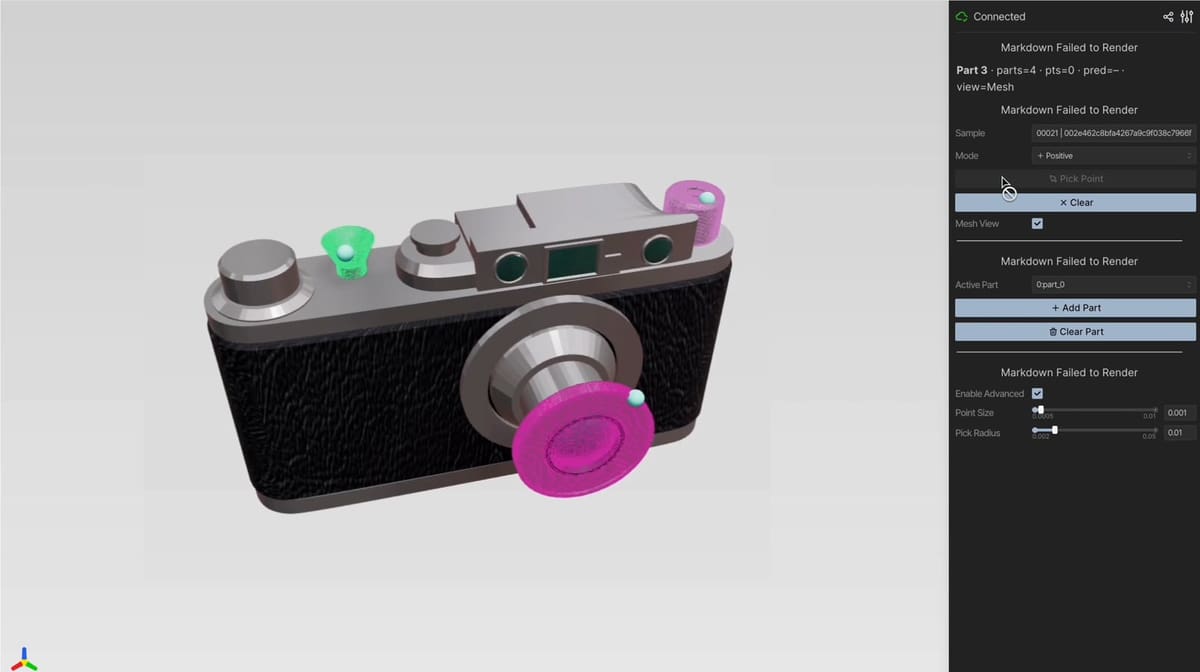
The experimental SegviGen system represents a novel approach to 3D model preparation. Developed by Bambu Lab researchers, it can automatically identify individual components within a 3D model to simplify the process of breaking down designs into manageable, 3D-printable parts.
- Automated Identification: Accurately recognizes individual components within complex 3D structures.
- Open Resources: The research team has already released the associated code, pretrained models, and an interactive demo for the community.
- Streamlined Workflow: Reduces the need for tedious manual cutting and mesh editing prior to slicing.
Pro-Tip: Leverage available interactive demos and open-source pretrained models to test how experimental segmentation tools handle your specific geometry types before committing to a full pipeline change.
Comparison Matrix
| Software / System | Modeling Type | Platform | Pricing |
|---|---|---|---|
| SegviGen (Bambu Lab) | AI Segmentation / Splitting | Research / Open-Source Demo | Free (Experimental) |
Summary & Final Recommendation
Automated 3D model segmentation is poised to significantly lower the barrier for printing complex assemblies. With projects like SegviGen making pretrained models and code openly accessible, users and developers alike have new opportunities to explore automated component splitting.
We want to hear from you! What tools do you currently rely on for splitting and preparing complex 3D models, and how would an AI-driven segmentation assistant fit into your workflow? Let us know in the comments below!