Bambu Lab Patent Reveals Multi-Printhead Toolchanger Concept Beyond Vortek
Summary: Bambu Lab has filed new patent applications detailing an ambitious multi-printhead toolchanger system. Moving beyond hot-end swapping concepts like Vortek, this architecture accommodates full printhead exchanges and direct multi-spool routing to deliver low-waste multi-material 3D printing.
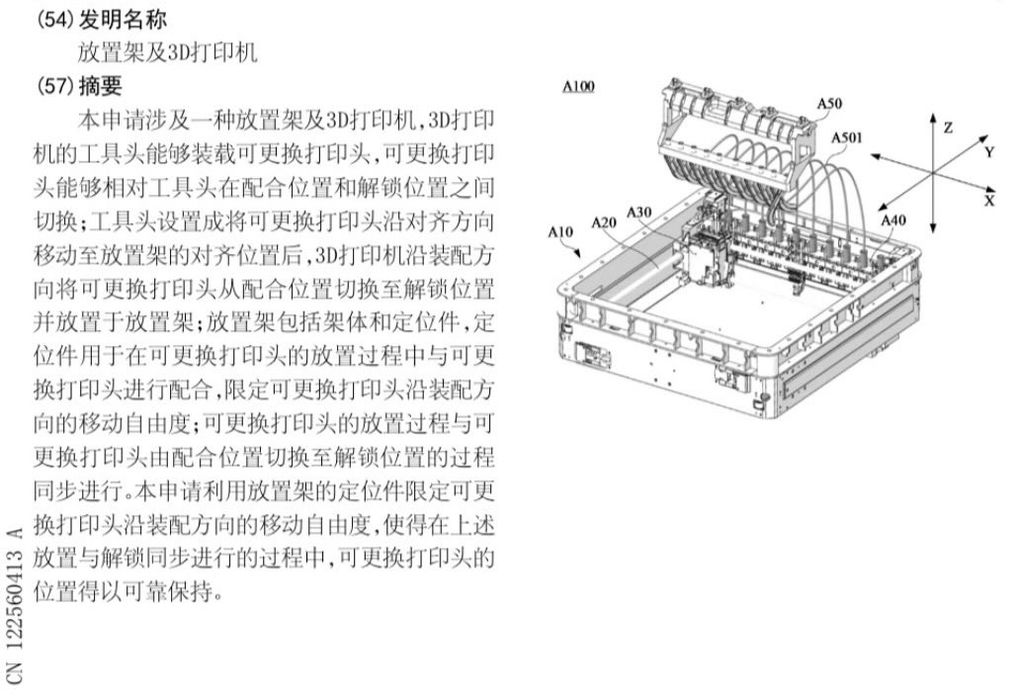
Key Takeaways
- Full Printhead Swapping: Unlike Bambu Lab's Vortek technology which interchanges hot ends, this design replaces entire printhead assemblies.
- Coordinated Docking Motion: The mechanical system enables placing a printhead onto a storage rack and unlocking it simultaneously in one continuous movement.
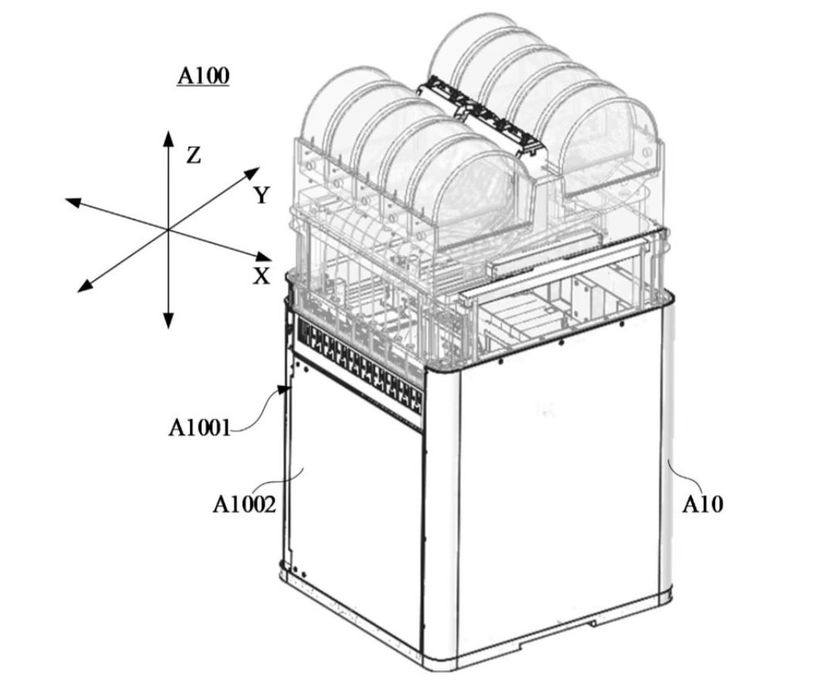
- Integrated High-Capacity Spool Rack: Diagrams illustrate a large bank of spools directly above the toolheads, potentially bypassing the need for an external filament swapping unit (AMS).
Detailed Overview
3D printing manufacturers are increasingly turning toward low-waste alternatives to traditional single-nozzle filament swappers. While Prusa introduced the XL toolchanger and Bambu Lab developed its Vortek hot-end swapping technology, newly uncovered Chinese patents indicate Bambu Lab may be exploring a full multi-toolhead architecture.
Diagrams originating from Chinese patent filings reveal a significant departure from existing systems. The documentation includes three interrelated patent filings:
- CN122560409A: Covers a toolhead/3D printing system featuring a dedicated nozzle cooling duct that also integrates nozzle illumination.
- CN122560412A: Focuses on a placement rack layout designed to store replaceable printheads.
- CN122560413A: Details an alternative placement-rack and toolchanger architecture covering distinct positioning and locking mechanics.
Together, these filings describe an ecosystem engineered around rapid, mechanical toolchanging during print jobs.
Deep Dive & Technical Insights
Mechanics of the Toolchanger
The primary carriage design moves across a storage rack located at the rear or side of the machine frame. The printer's primary toolhead carries a modular, replaceable printhead that toggles between a locked coupling position and an unlocked state.
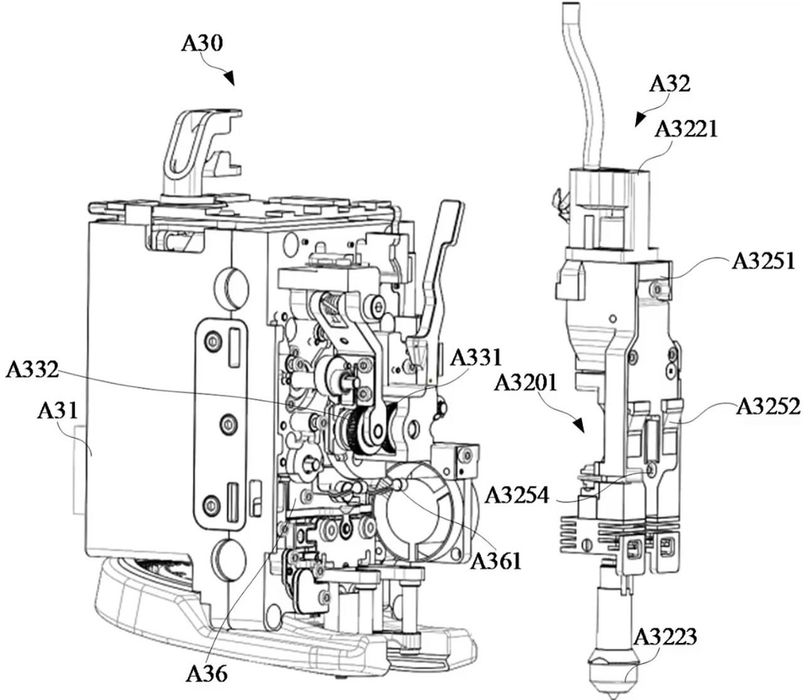
When a swap is triggered, the motion system aligns the toolhead with a designated dock on the storage rack. The storage rack features built-in mechanical positioning constraints. As the toolhead performs its movement into the rack slot, it physically releases the replaceable unit, executing docking and unlocking as a single coordinated sequence. Picking up a new head reverses this exact motion.
Comparison: Vortek vs. Full Printhead Swapping
Bambu Lab’s existing H2C platform utilizes two toolhead positions: one fixed unit and one capable of accepting up to six Vortek induction hot ends. However, the mechanism in patent CN122560413A differs fundamentally:
- Assembly Volume: The removable modules are significantly larger and contain more functional components than lightweight induction hot ends.
- Dedicated Tool Architecture: Instead of retrofitting a dual-head chassis, the machine layout is built entirely around dedicated printhead docks.
- Multi-Head Capacity: The dock arrays show space for numerous independent printheads.
Filament Delivery & Machine Architecture
The machine diagrams display a top-mounted array holding up to ten filament spools situated directly above the parked printhead docks. Individual feed paths route downward into each corresponding toolhead.
If material remains dedicated to individual printheads via direct feeding:
- Filament retraction and purging during material swaps are virtually eliminated.
- An external material switching unit (such as an AMS) becomes unnecessary for standard multi-color or multi-material prints.
While patent illustrations serve as conceptual diagrams rather than precise scale production blueprints, the physical structure highlights a larger, industrial-class desktop or workshop machine frame.
Conclusion & Resources
While patent applications demonstrate internal technical exploration, they do not guarantee an immediate commercial product release. Bambu Lab may be prototyping next-generation platforms or securing intellectual property against rival toolchanging implementations. Regardless of whether this specific design hits the market, it underlines an industry-wide transition away from purge-heavy filament swapping toward high-efficiency, multi-tool additive manufacturing.
- Original Source: Published via Fabbaloo
- Patent Reference: CN122560409A, CN122560412A, CN122560413A (via X / @BokuShumei)