3D Printed Banjo Uses Party Balloon as Its Sound Box to Explore How Air Changes Tone
Summary: The Balloon Banjo by Co:Creation Lab is a playable DIY instrument that uses a standard party balloon as its primary resonance chamber. By adjusting balloon inflation and string tension, users can directly explore and adjust acoustic physics using tool-free 3D-printed parts.
Key Takeaways
- Acoustic Physics in Action: Changing the volume of air in the party balloon directly alters the instrument's volume, resonance, and sound character.
- Tool-Free Modular Assembly: The instrument consists of 19 3D-printed parts held together entirely with hand-turned plastic screws—no glue, metal hardware, or tools required.
- Material & Stress Considerations: The design specifies key print tolerances and requires printing the neck flat to withstand string tension along layer boundaries.
Detailed Overview
A Party Balloon Becomes a Hands-On Lesson in Sound
A 3D printed instrument created by Co:Creation Lab uses a replaceable party balloon as its sound box, turning the physics of acoustic resonance into something users can physically adjust and observe. Called the Balloon Banjo, the small playable object combines seven unique printed component types with fishing line or nylon strings and a conventional round balloon to form a DIY instrument that serves as an interactive experiment in acoustics.
Plucking a string transmits acoustic vibrations into the inflated balloon, where the air volume dictates the resulting resonance. Inflating or deflating the balloon shifts the character of the tone, while modifying the tension or material of the strings alters the sound further. The modular construction invites continuous testing: users can swap the balloon for different sizes or exchange fishing line for nylon strings of varying thicknesses.
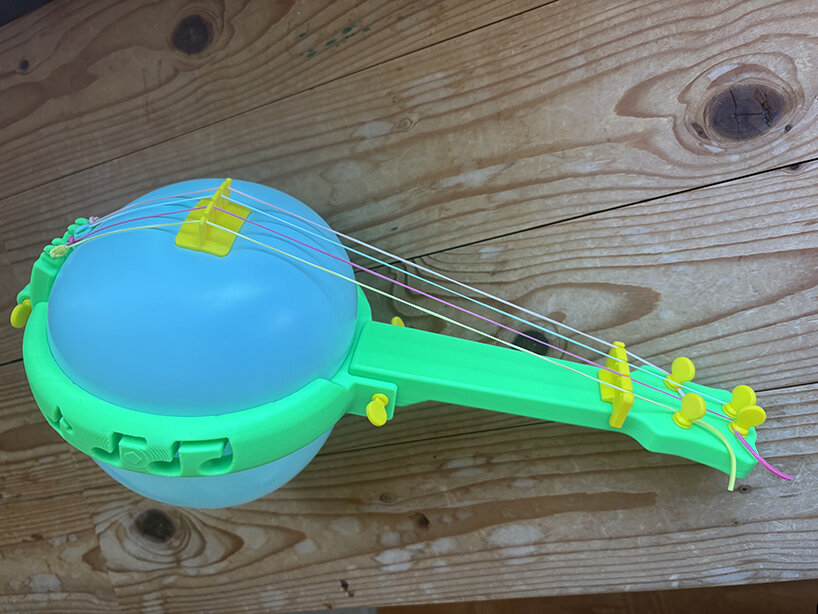 All images courtesy of Co:Creation Lab
Printable Instrument Built for Experimentation
The banjo features seven distinct printed part types and 19 pieces in total:
- 1 Neck
- 2 Flanges (Left and Right)
- 2 Bridge components
- 7 Pegs
- 7 Peg sockets
Once the sockets are fitted into the body, the components are joined using plastic screws that are turned by hand. Because it requires no metal hardware, adhesives, or screwdrivers, the instrument can be fully assembled, adjusted, disassembled, and rebuilt without committing to a static setup.
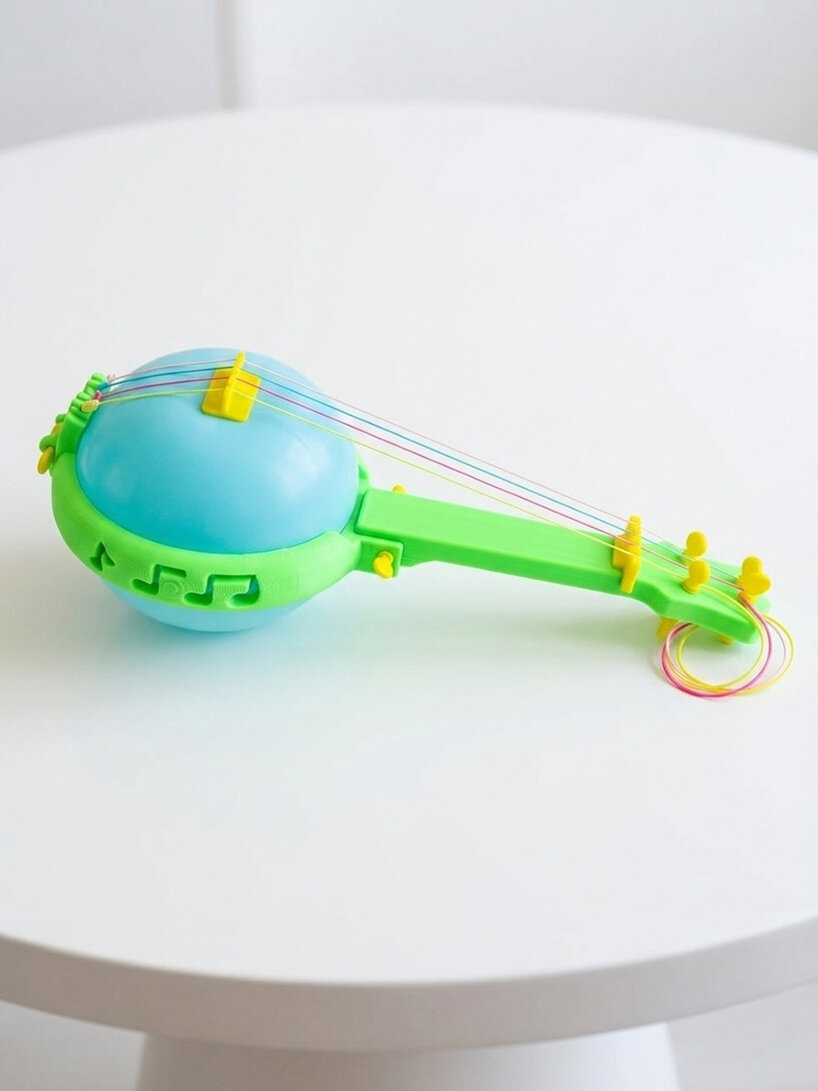 The playable instrument combines a printed body with colorful nylon strings and hand-turned plastic pegs.
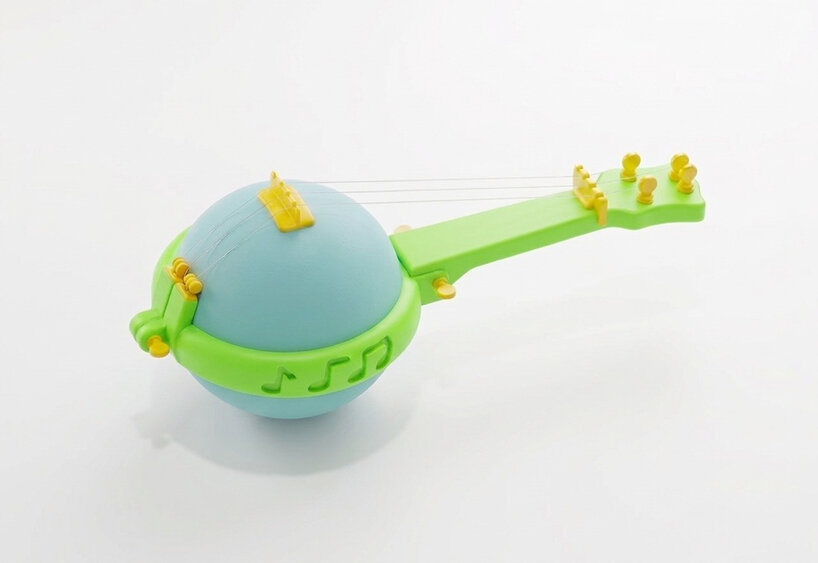 The 3D-printed Balloon Banjo uses an inflated party balloon as its sound box.
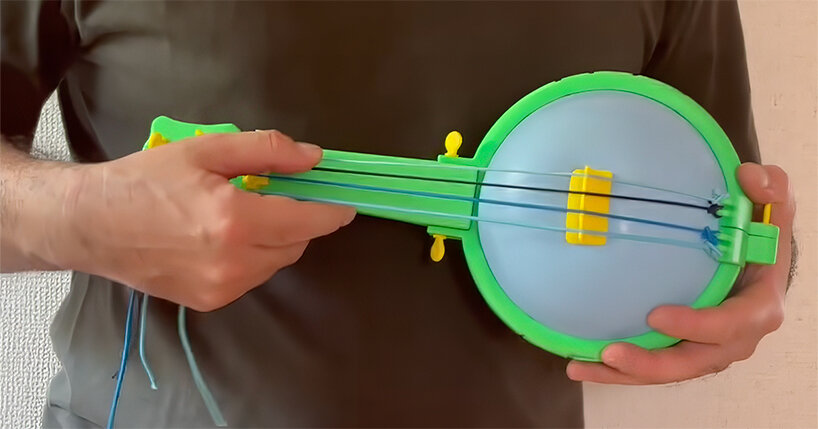 The balloon sits inside the printed frame, where changes in inflation alter the instrument’s tone.
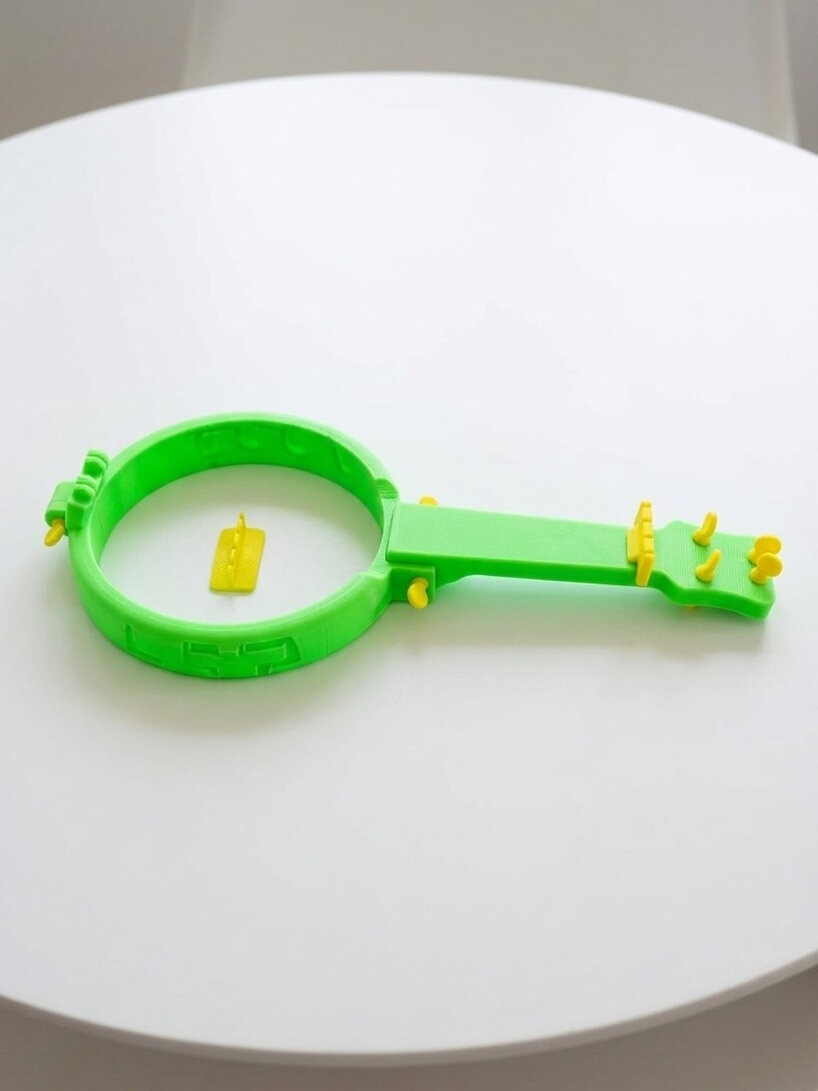 With the balloon removed, the printed frame reveals the structure of the instrument’s sound box.
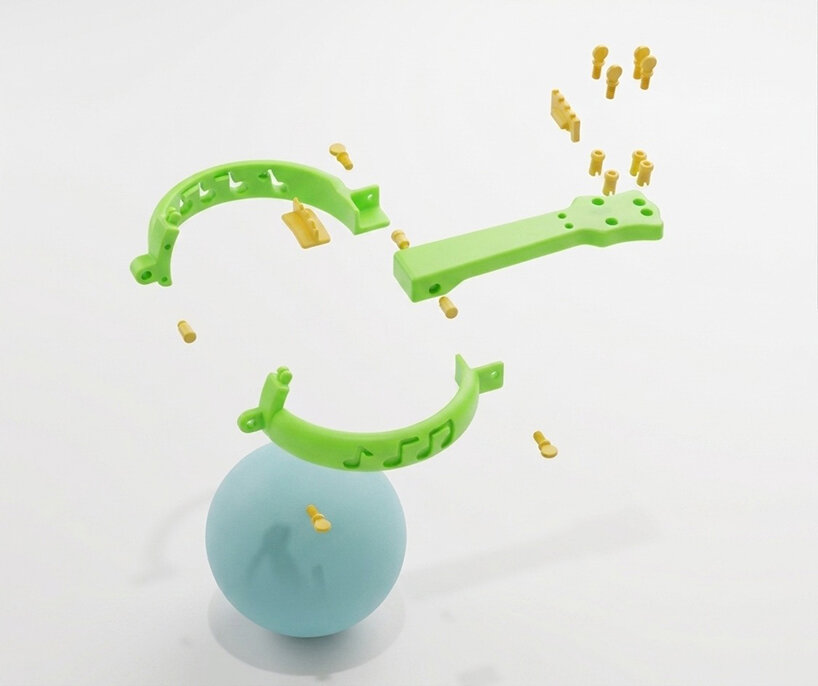 Its individual printed components are reassembled without glue or metal hardware.
Deep Dive & Technical Insights
The physical behavior of 3D-printed materials strongly influenced the technical specifications and orientation of the Balloon Banjo's model files:
| Specification Parameter | Value / Detail |
|---|---|
| Primary Material | PLA (or PETG) |
| Nozzle Diameter | 0.4 mm |
| General Layer Height | 0.2 mm |
| Peg & Socket Layer Height | 0.16 mm (for tighter fit tolerance) |
| Infill Percentage | 15% |
| Estimated Total Print Time | ~11 hours |
| PLA Clearance Tolerance | 0.15 mm |
| PETG Clearance Tolerance | ~0.20 mm |
Structural Stress & Orientation
The orientation of parts on the print bed is dictated by directional layer strength under mechanical load. The neck component is designed to be printed completely flat. Because layer adhesion is weaker along vertical layer seams, printing the neck upright would risk snapping the part along a layer line once string tension is applied.
Conclusion & Resources
The Balloon Banjo demonstrates how additive manufacturing and everyday items can be combined to create accessible, reconfigurable tools for hands-on learning in sound physics and design design mechanics.
- Project Name: Balloon Banjo
- Designer: Co:Creation Lab
- Social Media: @cocreationlab
- Video Overview: Co:Creation Lab YouTube Channel