Sculptural Table Lamps Combine 3D Printing, Graphic Geometry, and Saturated Color
Summary: Designer Charlie Firth’s ongoing table lamp series, Colorful Rebellion, bridges functional lighting and sculptural design through additive manufacturing and Memphis-inspired geometry. By harnessing modular digital 3D modelling and internal print infill patterns, Firth transforms technical manufacturing traits into key visual features.
Key Takeaways
- Additive Aesthetics: Technical characteristics of 3D printing—such as infill patterns, layer lines, and surface textures—are purposefully leveraged as light-diffusing visual elements.
- Memphis-Inspired Modularity: Firth blends graphic motifs, saturated colors, and 2D collage techniques into interchangeable modular 3D components.
- Shift to Expressive Design: Moving away from post-2020 beige minimalist interior trends, the series emphasizes color, playfulness, and personal expression in domestic objects.
Detailed Overview
Based in South West Wales, product and furniture designer Charlie Firth develops an evolving design language focused on color, modularity, and digital fabrication. His ongoing collection of 3D-printed table lamps combines practical lighting with sculptural geometry reminiscent of the Memphis movement. By translating bold geometric shapes, layered patterns, and saturated hues into physical objects, Firth creates expressive lighting tailored for contemporary domestic interiors.
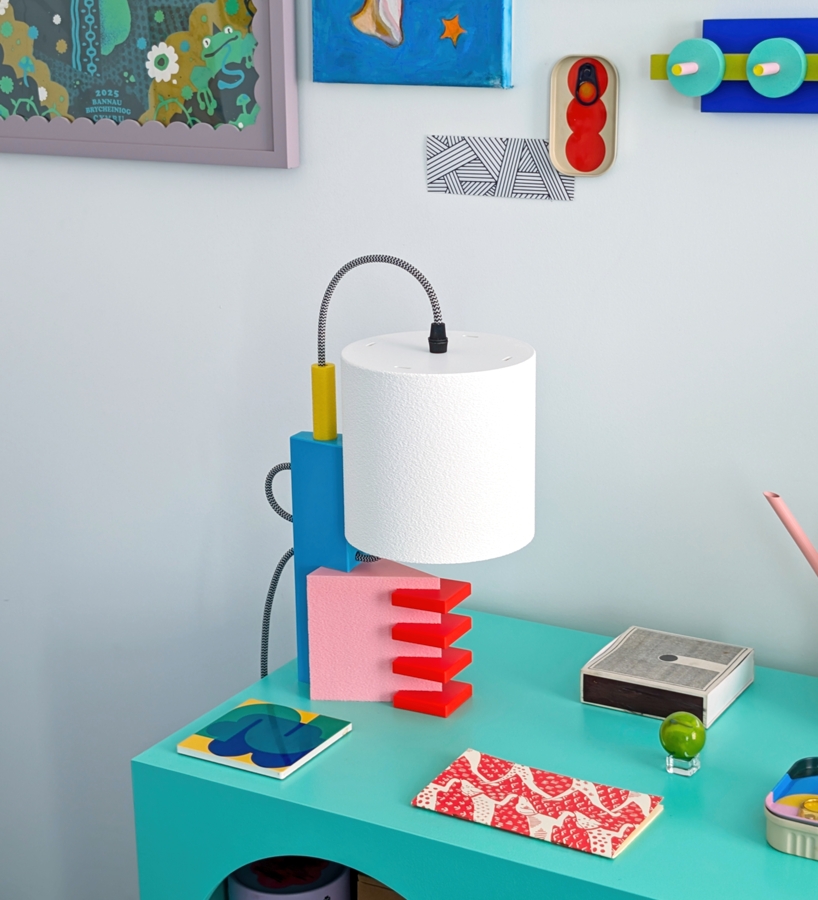
‘Memphis Is Back’ Lamp | all images © Charlie Firth
Memphis Inspiration & Design Workflow
Firth’s creative process originates with two-dimensional collage drawings. Drawing inspiration from graphic motifs and block forms gathered in his sketchbooks, he gradually layers these elements into composite designs.
Once assembled on paper, these compositions transition into digital modular 3D models. Working digitally allows Firth to rapidly iterate, swap out components, test varying geometric arrangements, and evaluate color palettes prior to fabrication—significantly shortening the traditional physical prototyping phase common in furniture design.
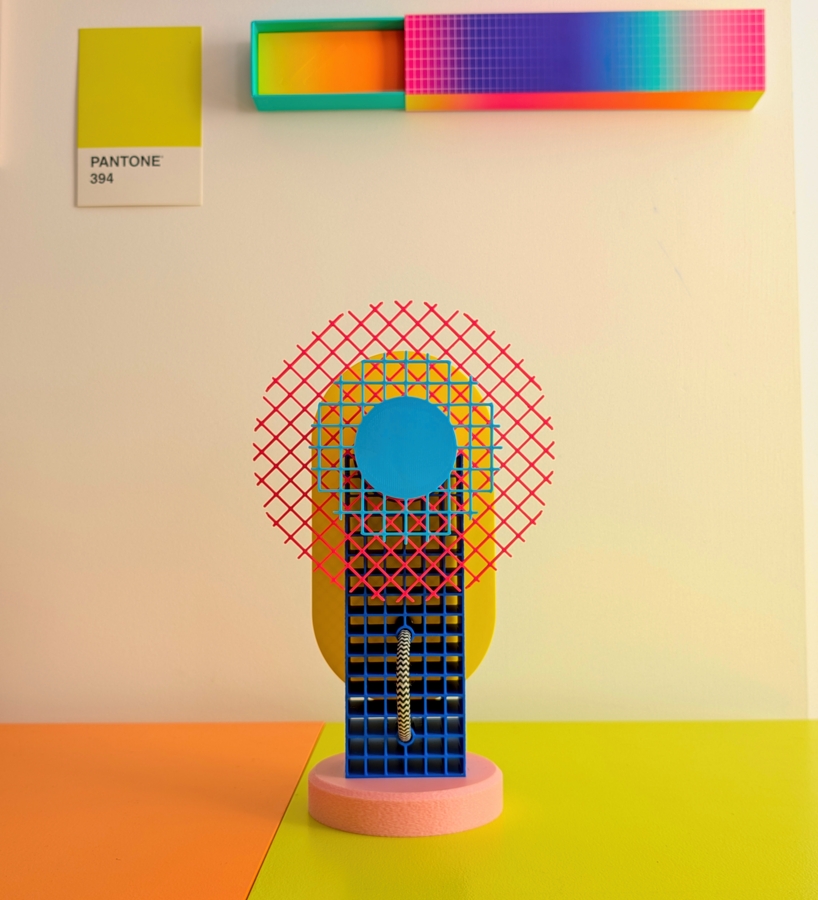
‘Hatched’ Lamp is inspired by the infill structure used to create 3D forms
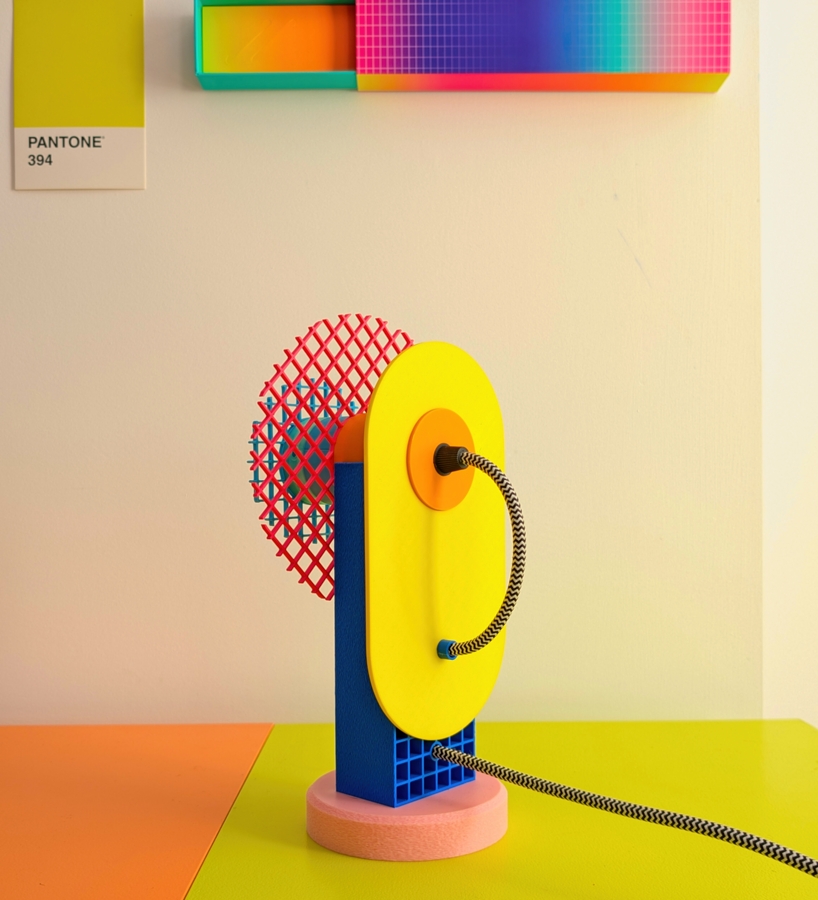
This model is often viewed as a skeletonised lamp
Deep Dive & Technical Insights
Leveraging Additive Manufacturing as Visual Features
Rather than concealing the artifacts of additive fabrication, Firth integrates the technical nuances of 3D printing directly into the design language of each lamp. Infill structures, layer lines, and subtle variations in surface texture are purposefully controlled to alter how light diffuses and reflects through the components.
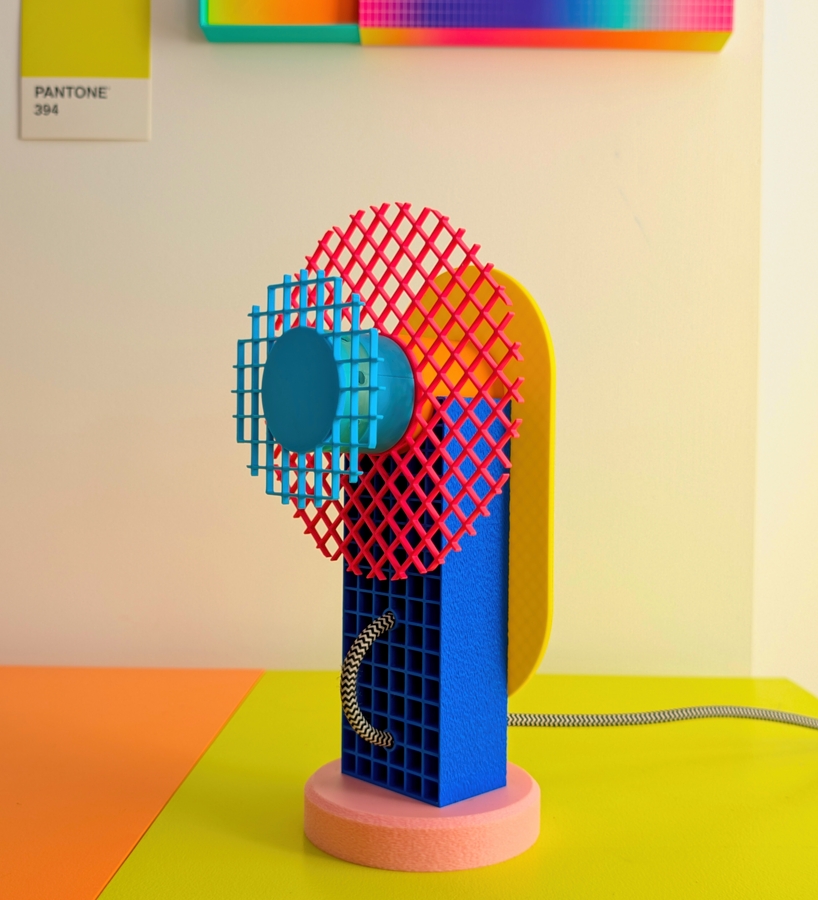
Saturated colors introduce a more expressive character to domestic objects
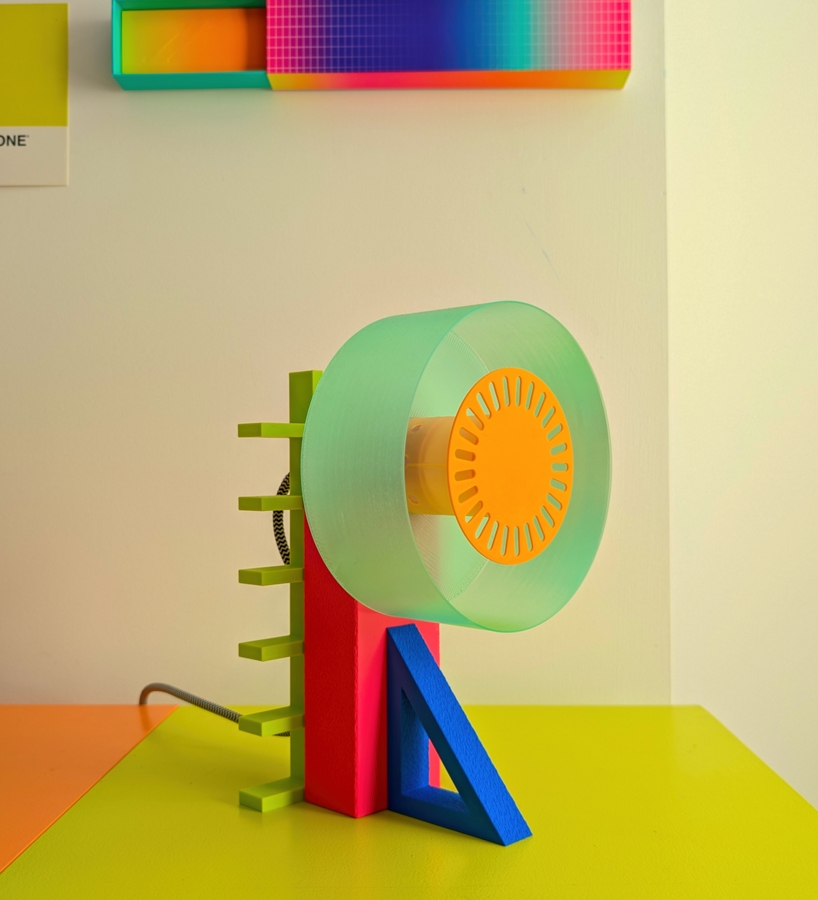
A lamp with no rules, created through playful collage and contrasting colors
A clear example of this technique is seen in the ‘Memphis Is Back’ lamp. Originally discovered as an accidental phenomenon, the internal cross-hatched infill pattern inside the printed shade becomes illuminated when the light source is switched on. Firth embraced this effect, refining and deliberately applying cross-hatched infill structures across subsequent models to control shadow, glow, and structural depth.
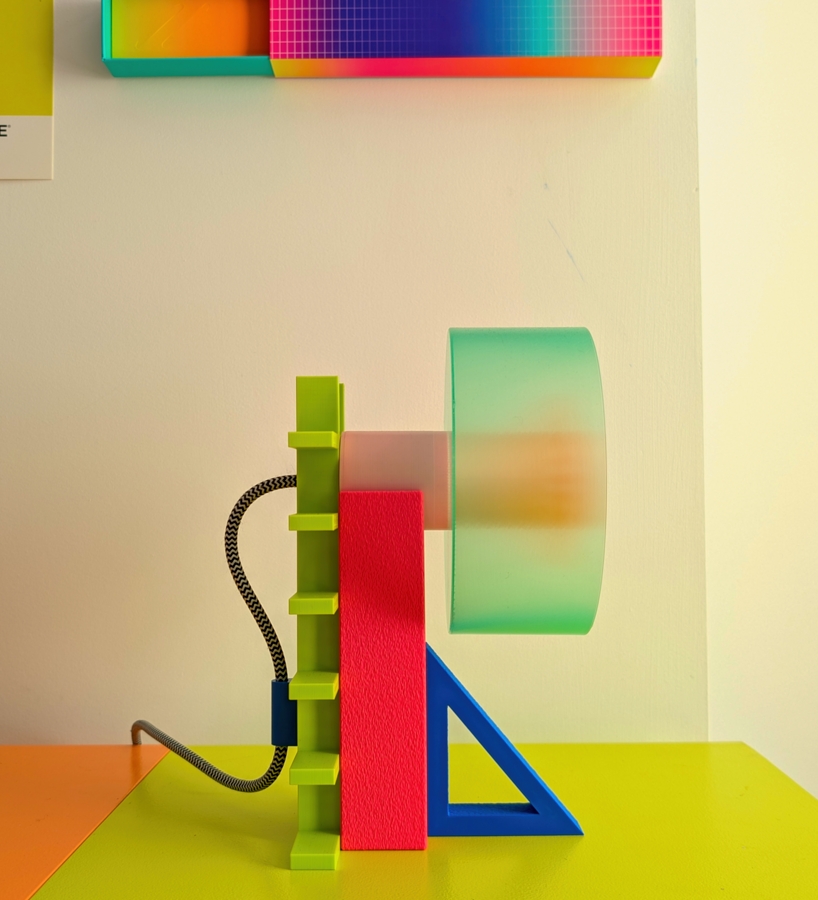
Modular components allow forms, arrangements, and colors to be digitally interchanged
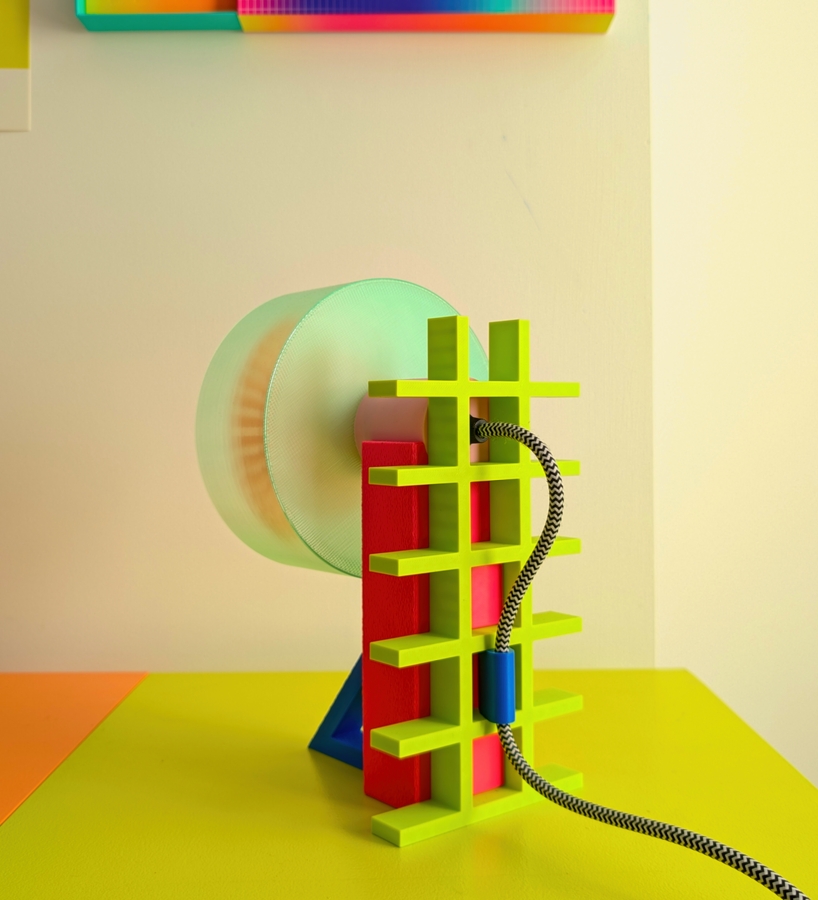
The lamps sit between functional lighting and sculptural design

Color and geometry combine across the modular lamp compositions
The Departure from Neutral Minimalist Interiors
Earlier in his career, Firth worked predominantly with minimal forms and monochromatic palettes, catering to a market focused on beige, neutral aesthetics. However, his perspective shifted during the COVID-19 pandemic while living in a neutral, temporary rental apartment in Bath.
The inability to personalize the clean, marketable space highlighted the limits of restrained minimalism, driving Firth to pivot toward rich color, playful geometry, and distinct character in home furnishings.
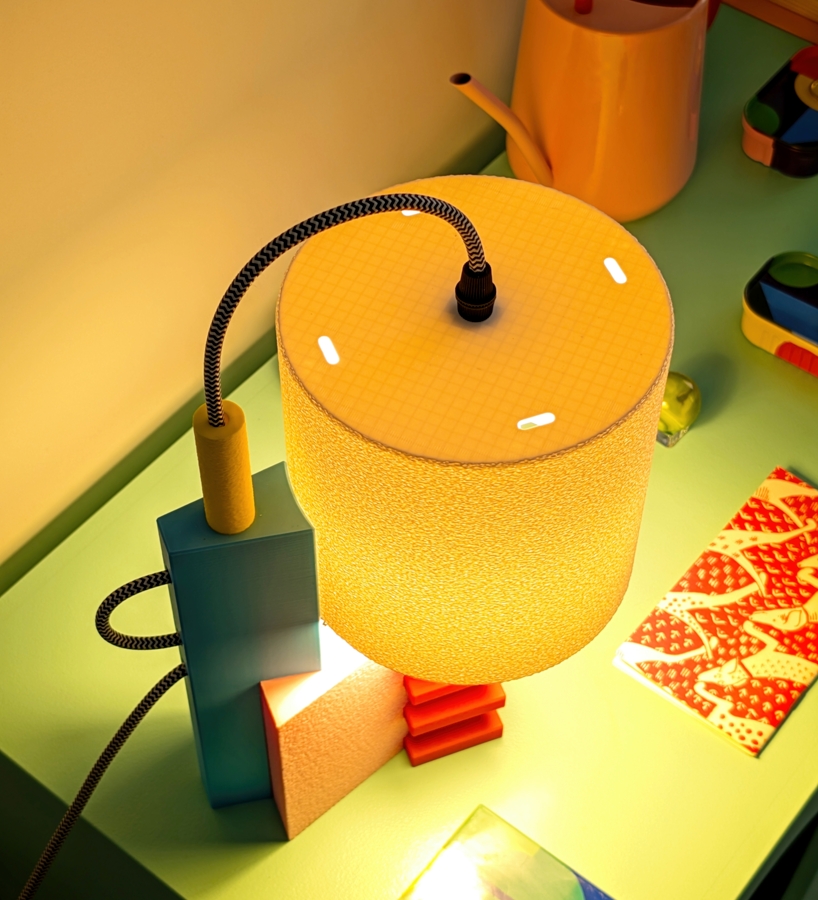
‘Memphis Is Back’ infill texture on the shade becomes visible when the lamp is turned on
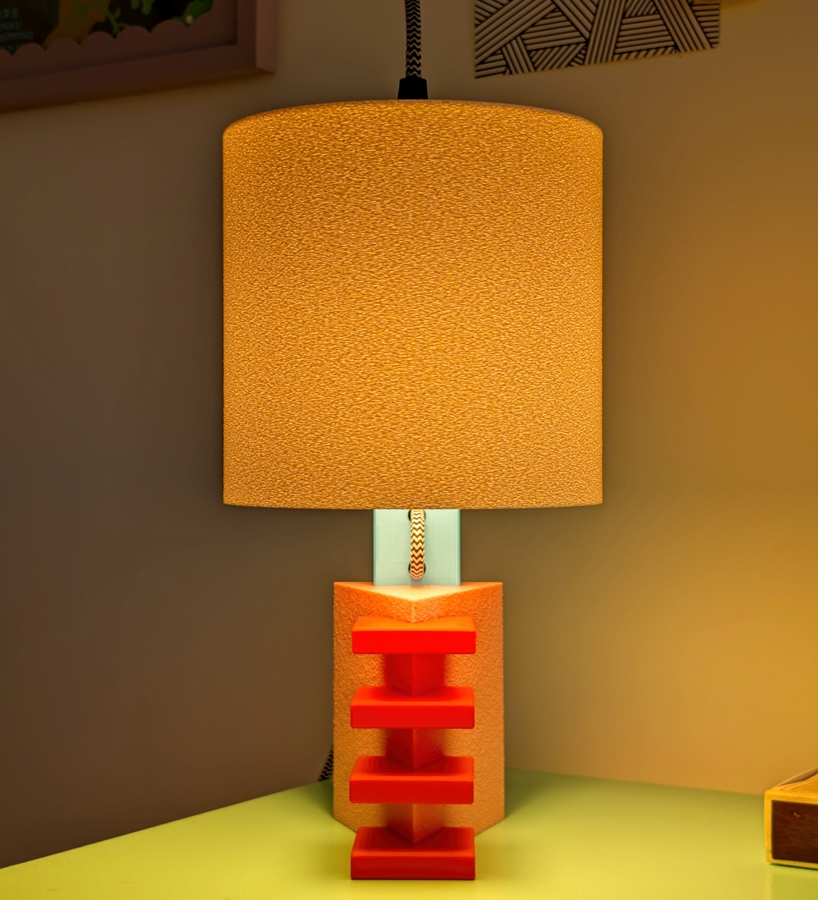
‘Memphis Is Back’ Lamp features a textured shade diffusing a soft, warm glow

3D printing makes the manufacturing process visible in Firth’s finished objects
Conclusion & Resources
Charlie Firth’s Colorful Rebellion series highlights how digital fabrication, geometric modularity, and saturated color can elevate everyday lighting fixtures into expressive sculptures. By making the internal mechanics of 3D printing an integral part of light diffusion, the collection opens up new possibilities for customization and visual storytelling in interior design.
Project Details
- Project Name: Colorful Rebellion
- Designer: Charlie Firth (Instagram)