Build a DIY Open-Source Flipper Zero Using a ESP32-DIV
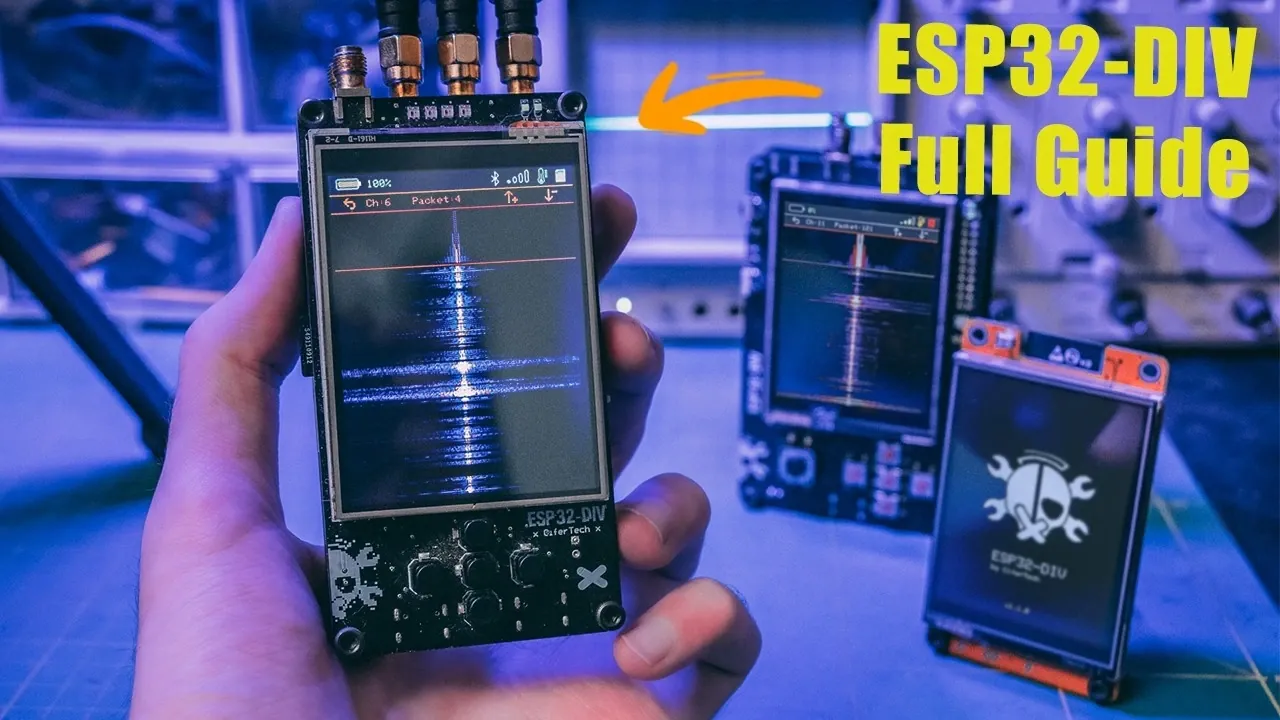
Summary: The ESP32-DIV is a versatile, open-source platform designed for wireless experimentation and signal analysis. Powered by ESP32 and ESP32-S3 microcontrollers, it serves as a modular DIY alternative to the Flipper Zero across Wi-Fi, Bluetooth, RFID, NFC, sub-GHz, and IR protocols.
Key Takeaways
- Multi-Protocol Capability: Supports Wi-Fi packet monitoring, BLE spoofing, RFID/NFC card cloning, Sub-GHz spectrum analysis, and IR signal capture/replay.
- Modular Hardware Options: Available in Version 1 (ESP32), Version 2 (ESP32-S3), and beginner-friendly CYD touchscreen variants with expandable shield support.
- Multiple Deployment Methods: Features simple firmware installation via a browser-based Web Flasher, a Python desktop tool, or deep customization through the Arduino IDE.
Detailed Overview
Developed as an open-source project by CiferTech, the ESP32-DIV is designed for wireless experimentation, security testing, and signal manipulation. Built on the popular ESP32 and ESP32-S3 microcontrollers, the device consolidates multiple radio and signal tools into a portable form factor similar to commercial pentesting handhelds like the Flipper Zero.
Hardware Architecture and Variants
The ESP32-DIV platform is structured across three hardware variations to support different user requirements and skill levels:
- Version 1: A compact, all-in-one design powered by the standard ESP32 chip for everyday testing.
- Version 2: An upgraded variant using the ESP32-S3 microcontroller, offering higher processing performance and expanded features.
- CYD (Cheap Yellow Display): A pre-assembled development board with an integrated touchscreen display, optimized for beginners looking for immediate deployment.
Across these builds, the system leverages several key onboard hardware components:
- TFT Display with Touch Controller: Offers an interactive graphical interface.
- IP5306 Battery Management: Manages power distribution and battery charging for mobile use.
- CP2102 USB-to-Serial: Handles data transfer, flashing, and serial debugging.
- PCF8574 Port Expander: Provides tactile button input processing.
- WS2812 NeoPixel LEDs: Offers configurable visual status indicators.
- Modular Shields: Expansion modules designed for RF, RFID, NFC, GPS, and Infrared functionality.
Firmware Flashing Methods
Users can flash or update the device using three different flashing workflows depending on their technical background:
- Web Flasher: A browser-based tool for flashing pre-compiled firmware directly over USB without installing development software.
- Desktop Flasher: A Python-based GUI application designed for Windows systems.
- Arduino IDE: The complete development route for compiling source code, modifying firmware modules, and programming custom features.
Deep Dive & Technical Insights
Wireless Network Testing
The device utilizes its integrated radios to perform diagnostic tests across several frequencies:
- Wi-Fi (2.4 GHz): Enables network scanning, packet capturing, beacon spamming, deauthentication testing, probe flooding, and captive portal setup.
- Bluetooth & BLE: Conducts BLE scanning, packet sniffing, spoofing, and signal disruption using tools like BLE Rubber Ducky and Sour Apple scripts.
- Sub-GHz & 2.4 GHz RF: Facilitates spectrum analysis, protocol disruption, signal jamming, and replay attacks.
Signal Analysis: RFID, NFC, and IR
- RFID and NFC: Supports reading, decoding, cloning, erasing, and evaluating security mechanisms on common smart cards and badges.
- Infrared (IR): Captures incoming IR raw data, saves custom command profiles, and replays signals to act as a programmable universal remote.
GPS & Spatial Diagnostics
When connected to a GPS shield module, the ESP32-DIV can perform location-aware security research:
- War Driving: Logs real-time GPS coordinates alongside detected wireless networks to map Wi-Fi distribution.
- Satellite Diagnostics: Evaluates raw satellite telemetry to analyze signal quality and positional accuracy.
System Configuration & Customization
The built-in system menu includes tools for managing stored logs and files, calibrating the touch panel, and customizing user settings like screen brightness, UI color themes, and radio scanning behavior.
Conclusion & Resources
The ESP32-DIV provides an accessible, fully customizable DIY alternative for learning wireless communications, hardware hacking, and signal analysis. With all schematics, firmware code, and documentation hosted publicly on GitHub, users can expand and adapt the tool to fit custom security research projects.
Community & Project Resources
- Video Overview & Demonstration: CiferTech Youtube Channel
- Firmware & Hardware Files: Available via community-maintained repositories on GitHub.