Guide to 3D Printing Tolerances, Accuracy, and Precision
Summary: High resolution specifications on a 3D printer do not automatically guarantee accurate or precise printed parts. This guide breaks down the essential distinctions between accuracy, precision, and tolerance in additive manufacturing, evaluates how process and material selection influence dimensional consistency, and provides practical guidelines for designing toleranced mechanical assemblies.
Key Takeaways
- Accuracy vs. Precision vs. Tolerance: Accuracy measures closeness to CAD dimensions, precision measures repeatability across prints, and tolerance defines the acceptable variance allowed for an application.
- Technology Impact: SLA/DLP and SLS 3D printers offer the highest tolerances among commercially available plastic additive processes, significantly outperforming standard FDM printers.
- Design for Assembly Fits: Applying proper engineering fits (clearance, transition, interference) and considering layer grain orientation during model setup reduces post-processing effort and ensures reliable mechanical functionality.
Detailed Overview
Just because a 3D printer has "high resolution" in the printer specifications doesn’t mean your 3D printed parts will be accurate or precise.
Understanding the meaning of accuracy, precision, and tolerance is imperative for achieving meaningful 3D print performance for any application. In this post, we’ll parse through what these terms mean and how to think about them in the context of 3D printing. Then, we'll compare the tolerance ranges you can expect from different 3D printing processes and provide a detailed overview for tolerancing 3D printed assemblies.


Defining Accuracy, Precision, and Tolerance
To help visualize these concepts, consider target shooting:
Accuracy
Accuracy is how close a measurement is to the true value. In target shooting, the true value is the bullseye. The closer you are to hitting the bullseye, the more accurate your shot. In 3D printing, the true value corresponds to the dimensions designed in CAD.
Precision
Precision measures the repeatability of a measurement — how consistent your shots are at the target. Precision measures consistency only; your shots can cluster in the same spot repeatedly without hitting the bullseye. In 3D printing, precision translates to process reliability and repeatability across multiple prints.

Tolerance
How precise do you need to be? That is defined by tolerance. Tolerance establishes the acceptable variance or "wiggle room" for an application. Dynamic mechanical assemblies require tight tolerances, whereas simple plastic enclosures can accept broader variance ranges.

Generally, achieving and holding tighter tolerances requires increased manufacturing controls, higher quality assurance, and elevated production costs.

What Impacts 3D Printing Tolerances, Accuracy, and Precision
1. 3D Printing Technology
Because 3D printing is an additive layer-by-layer process, each layer introduces potential sources of inaccuracy. The technology used to form layers dictates precision and repeatability.
| Technology | Typical Tolerance Ranges | Key Considerations |
|---|---|---|
| SLA & DLP | ±0.15% (1–30 mm) ±0.2% (31–80 mm) ±0.3% (81–150 mm) (Lower limit: ±0.02 mm) |
Uses precise light sources to cure liquid resin into thin solid layers. Support structures are required to maintain accuracy on thin or complex features. |
| SLS & MJF | ±0.5% or 0.3 mm (whichever is larger) | Fuses powder with lasers or heating lamps. Unfused powder supports the part, eliminating dedicated supports and enabling complex internal geometries. |
| FDM | ±0.5% (Lower limit: ±0.5 mm) | Extrudes thermoplastic filaments through a nozzle. Lacks fine feature control and is prone to warping due to differential thermal cooling. |


2. Material Properties
Material choice directly influences part stability and susceptibility to warping:
- Resin Modulus: In SLA, resins with high green modulus (stiffness before post-curing) enable fine, intricate features to print accurately without bending.
- Thermal Shrinkage: In FDM, materials processed at elevated temperatures (like ABS) shrink and warp more during cooling than materials like PLA.


3. Post-Processing
Post-processing steps alter outer surface dimensions:
- SLA/DLP: Post-curing induces predictable material shrinkage. Slicing software (e.g., PreForm) compensates for shrinkage automatically during print setup.
- FDM: Manual support removal and sanding remove surface material, altering local dimensions.
- SLS/MJF: Media blasting and depowdering maintain good consistency across batch runs.
4. Ecosystem Integration and Calibration
End-to-end integrated ecosystems (combining print preparation software, hardware tuning, verified materials, and post-processing hardware) deliver higher reliability. Validated material profiles pre-compensate for mechanical and thermal behaviors.

Deep Dive & Technical Insights
Tolerancing Considerations in 3D Printing
In traditional machining, tighter tolerances increase costs exponentially due to slower tool speeds and multi-stage operations. In contrast, 3D printing executes single-step automated builds where geometric complexity (e.g., undercut features, organic contours) comes at no additional production cost.
Commercially available resin (SLA/DLP) and powder bed fusion (SLS/MJF) technologies achieve tolerances bridging standard machining and fine machining specs. Tighter feature requirements beyond standard printer tolerance boundaries must be addressed using subtractive secondary processes like manual finishing or CNC machining.


Tolerancing for Assemblies: Engineering Fits
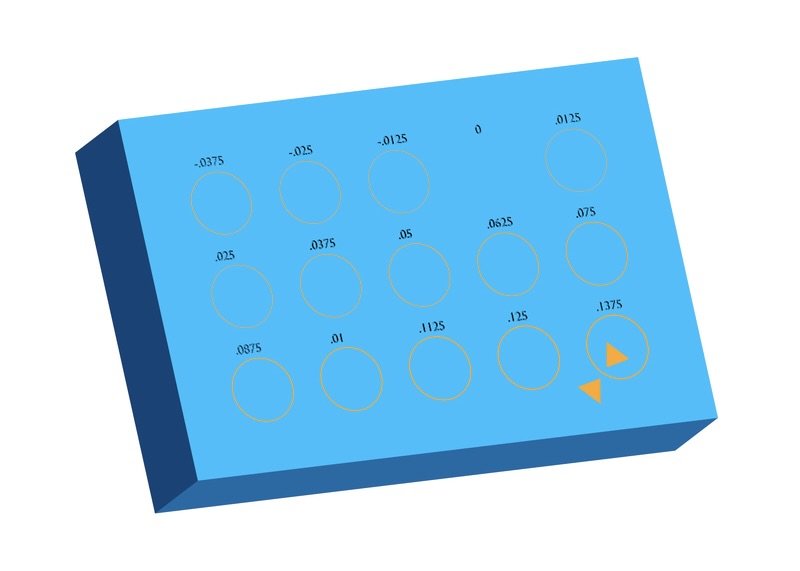
When designing multi-part mechanical assemblies, select the appropriate engineering fit based on functional requirements:

Clearance Fit
Active surfaces do not overlap, leaving space for smooth motion.
- Sliding Fit: Features minor lateral play.
- Running Fit: Has almost no play but slightly higher friction, requiring lubrication for accurate kinetic motion.
Transition Fit
Tolerance zones partially overlap, permitting simple manual assembly and disassembly.
- Keying Fit: Components align and insert into place with light force.
- Push Fit: Requires firm hand force to join and separate components.
Interference Fit
Tolerance zones fully intersect, creating rigid, permanent joints.
- Force Fit: Requires substantial force applied via hand tools (e.g., hammers or mallets).
- Press Fit: Demands high force applied through specialized machinery (e.g., arbor presses).
Practical Geometry Tolerancing Examples
Hole and Shaft: Designed as a clearance fit (sliding to running fit). Lubrication should be applied to prevent wear in dynamic shafts.
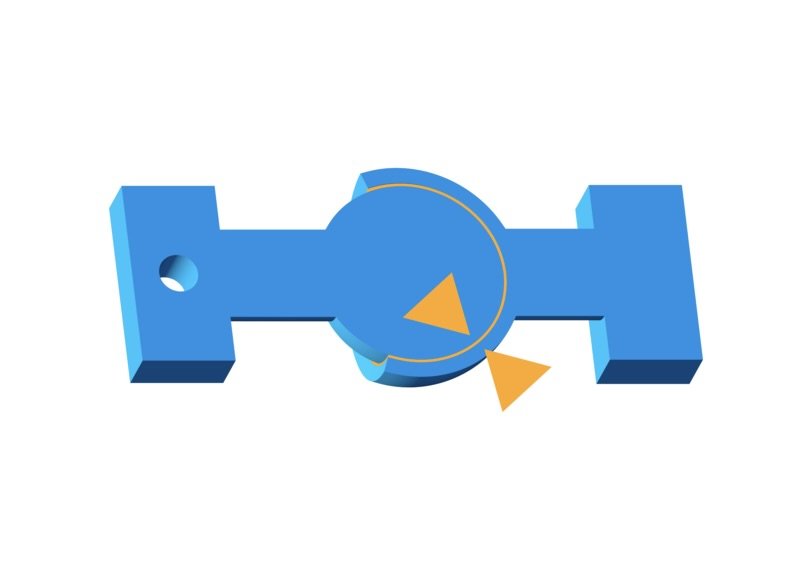
Ball and Socket: Combines clearance fit inside the socket for rotational freedom with press-interference at the entry lip. The lip deforms elastically during snap insertion.
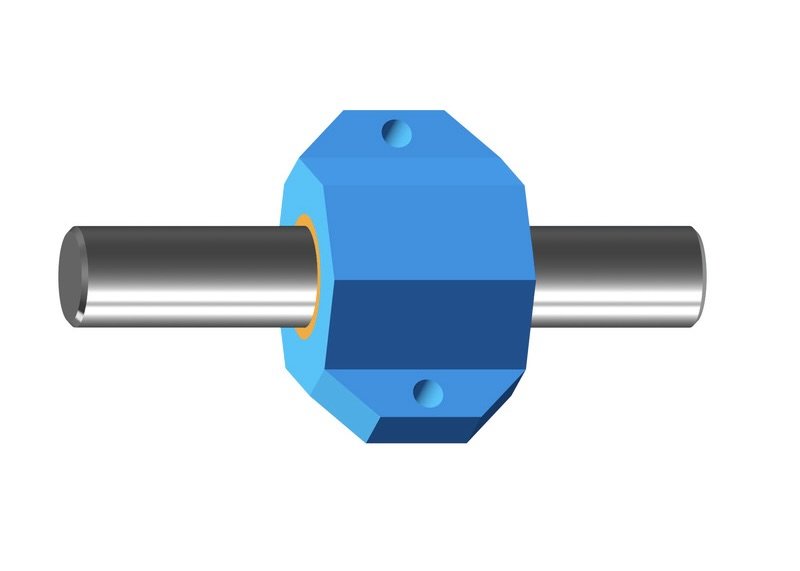
Rod and Bushing: Utilizes a clearance fit configured to act as a plain bearing along a guide rod.
Managing Friction, Orientation, and Post-Machining
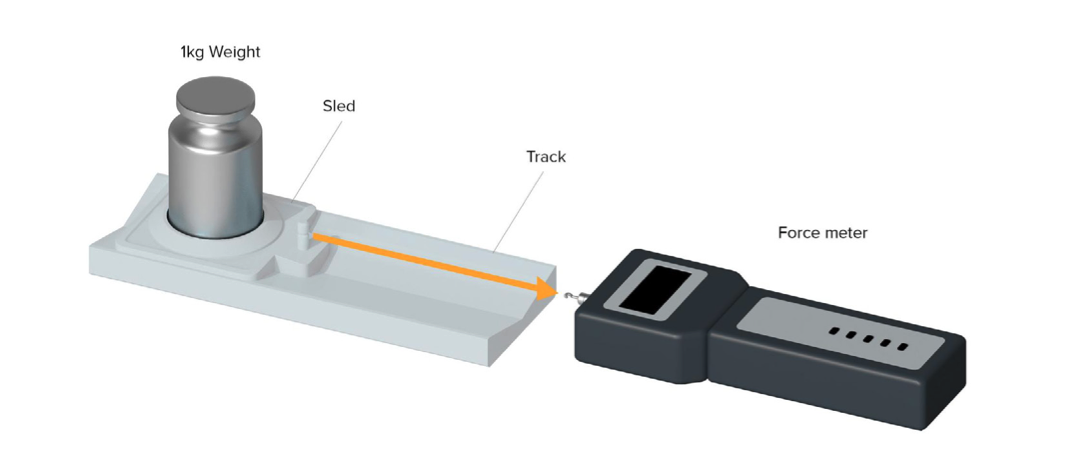
Friction Reduction: Sliding force depends on normal contact force and the material's coefficient of friction. Resins engineered for lubricity (such as Tough 1000 Resin) provide low sliding resistance.
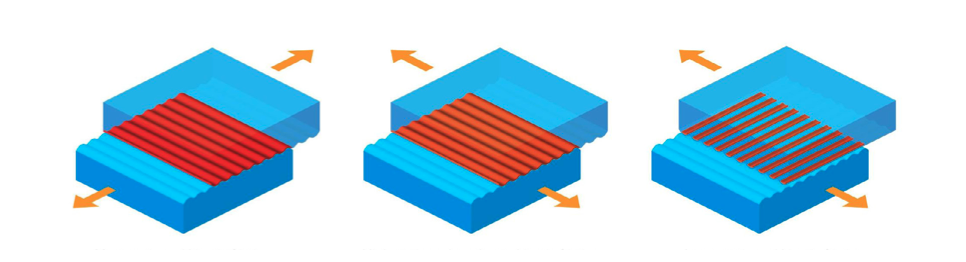
Print Orientation Effects: Orienting mating parts so that layer "grain" patterns are perpendicular minimizes contact area. Parallel layer orientation causes grooves to mesh, elevating static and kinetic friction.
Lubrication & Adhesives: Mineral oil or silicone-based greases (e.g., Super Lube) prevent long-term wear in kinetic systems. For permanent bonded joints, low-viscosity cyanoacrylate or liquid resin cured via a 405 nm laser pen works effectively.
Secondary Machining: Features demanding precision tighter than ±0.025 mm can be drilled or tapped post-print. High-elongation materials like Tough 1500 and Tough 2000 resins exhibit superior machinability.
Conclusion & Resources
- Summary: Dimensional accuracy and precision in 3D printing depend on technology selection, material shrinkage factors, ecosystem calibration, and proper assembly tolerancing. Designing for explicit fits and optimizing print orientation optimizes prototype performance and reduces iteration overhead.
- Resources: