Latest 3D Printing Innovations in 2026: 8 Trends Changing How We Create
Summary: In 2026, 3D printing progress is shifting from raw speed toward smarter, more reliable, and less wasteful systems. Key advancements include AI-assisted creation and monitoring, lower-waste multicolor printing, automated calibration, scan-to-print workflows, and desktop material recycling.
Key Takeaways
- Smarter Workflows Over Speed: Industry progress in 2026 focuses on AI error detection, tool-free or automatic nozzle swaps, and automated calibration to eliminate print failures.
- Wasp-Free Multicolor & Recycled Materials: Advanced multi-material systems reduce purge waste, while desktop recycling systems begin turning print scrap back into usable filament.
- Broader Accessibility: AI image-to-3D model conversion (such as CubeMe) and simpler 3D scanning workflows remove CAD hurdles for beginners and professionals alike.
Detailed Overview
In 2026, 3D printing isn’t just about speed anymore. Print faster, print bigger—this isn’t the whole story now. Progress is happening somewhere quieter: printers are starting to think for themselves. They capture failures before they destroy a print, calibrate automatically, and switch colors without wasting half a spool.
Additionally, advanced techniques like filaments made from recycled waste, metal printing strategies, and the use of AI in 3D printing are becoming accessible. The latest 3D printing innovations in 2026 are making technology more reliable, accessible, and less wasteful.
Quick Answer: What's New in 3D Printing in 2026?
The major shifts in 3D printing focus on smarter systems rather than just faster ones. AI facilitates model creation and real-time print monitoring. Multicolor and multi-material 3D printing are gaining adoption due to nozzle-changing systems and lower-waste automation. Engineering filaments, larger desktop build volumes, scan-to-print equipment, and filament recycling complete the main technological advancements.
What Counts as a Real 3D Printing Innovation in 2026?
Not every new feature earns the word "innovation." A software update that saves five clicks is not the same as a system that eliminates an error point. To judge whether a change counts as genuine innovation, evaluate if it saves time, material, or effort in an actual workflow.
Real innovation in 3D printing generally delivers:
- Less manual setup: The printer performs calibration automatically.
- Fewer failed prints: AI and sensors catch issues before filament is wasted.
- Lesser material waste: Especially in multi-material and multicolor printing.
- Extensive material support: Printing parts that withstand mechanical stress and high heat.
- Quicker iteration: Moving from concept to physical object faster.
- New practical uses: Enabling applications that were impossible on older machines.
Deep Dive & Technical Insights
8 Latest 3D Printing Innovations in 2026
1. AI-Assisted Creation and Monitoring
AI now impacts two distinct areas of the 3D printing workflow:
Design: Tools convert photos or rough ideas into printable 3D models without CAD experience.
Monitoring: AI-powered cameras inspect prints live to detect misprints, tangled filament, or print bed detachment.
Maturity: Available now.
Why it matters: Removes the CAD barrier for beginners and reduces wasted print runs.
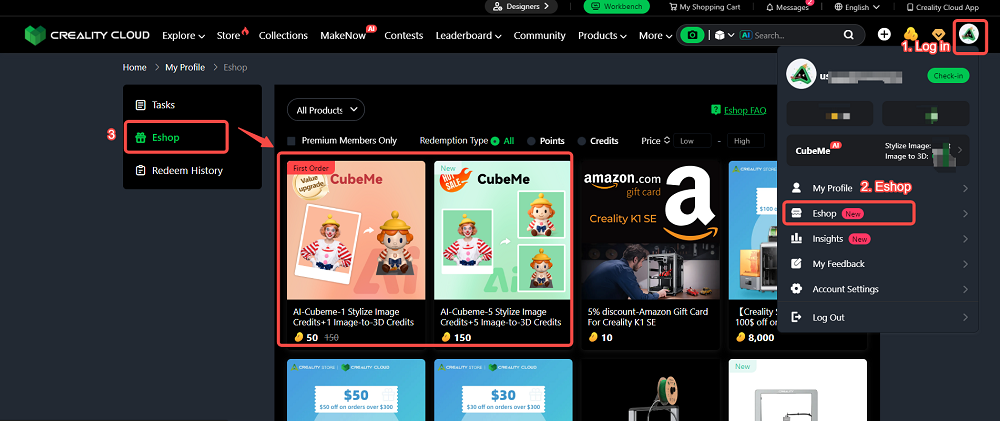
Evidence: Creality's SPARKX i7 features CubeMe (photo-to-3D model conversion) and an integrated AI camera system that detects spaghetti failures, air printing, and entanglement.
Limitations: AI-generated models often require mesh cleanup for complex geometries. Detection systems can catch obvious failures but cannot resolve poorly sliced files or underlying bed adhesion issues.
2. Accessible Multicolor and Multi-Material 3D Printing
Older multi-filament systems purged large quantities of filament per color switch. Modern setups use refined retraction and feeding mechanisms to switch faster while lowering purge waste.
- Maturity: Available now.
- Why it matters: Brings affordable multicolor production to small businesses and hobbyists without high per-print material costs.
- Evidence: Systems like the Creality Filament System (CFS) on machines like the SPARKX i7 utilize accessories (CFS Nano and CFS Lite) to support up to 4-color printing with lower waste.
3. Nozzle-Changing Systems
Designers are moving away from manual, multi-step nozzle changes toward tool-free, quick-swap hotend modules. Work is also underway on automated mid-print nozzle switching.
- Maturity: Mixed. Manual quick-swap nozzles are currently shipping; fully automated mid-print nozzle changing systems remain in development or early launch stages.
- Why it matters: Allows makers to switch between fine feature detail and high-speed infill extrusion seamlessly.
- Evidence: Current desktop printers like the Creality K3 feature quick-swap hotend assemblies for tool-free changes in seconds.
4. Automatic Calibration and Sensing
Manual bed leveling, input shaping tuning, and Z-offset setting are being replaced by automated pre-print routines.
- Maturity: Available now.
- Why it matters: Prevents first-layer failures, which historically account for most print errors.
- Evidence: Standard on modern desktop machines (e.g., SPARKX i7), which automatically run leveling, Z-offset calculation, and input shaping resonance tests before every job.
5. Engineering-Grade Filaments
Desktop machines increasingly support high-temperature, wear-resistant, and chemical-resistant filaments previously reserved for industrial units.
- Maturity: Available now for printers with enclosures and high-temp hotends/beds.
- Why it matters: Bridges the gap between aesthetic prototypes and functional end-use parts (jigs, mounts, fixtures).
- Limitations: Requires higher operating temperatures, enclosed environments, and costs more than standard PLA.
6. Large-Format Desktop Printing
Build volumes on desktop printers are scaling up, reducing the need to slice large models into smaller glued segments.
- Maturity: Available now across various price points.
- Why it matters: Enables single-piece production of large props, functional enclosures, and prototypes.
- Evidence: High-volume desktop printers such as the Creality K2 Series cater to large-format multicolor and technical material jobs.
7. Scan-to-Print Workflows
Portable 3D scanners are becoming tightly integrated with slicers, enabling faster digital capturing and reproduction.
- Maturity: Available now.
- Why it matters: Simplifies reverse-engineering broken components or creating custom-fit enclosures.
- Limitations: High reflectivity, transparency, and poor lighting can degrade scan accuracy, necessitating mesh repair software before printing.
8. Desktop Material Recycling
Compact desktop recycling systems process failed prints, purge material, and support structures back into reusable filament spools.
- Maturity: Announced / Early availability.
- Why it matters: Minimizes environmental waste and long-term material expense.
- Evidence: Emerging platforms (such as Creality's M1 and R1 initiatives) target closed-loop material re-extrusion.
- Limitations: Recycled filament typically exhibits lower tensile strength and inconsistent diameter compared to virgin filament, making it best suited for non-structural prototypes.
Industry Adoption Matrix
| User Group | What Matters Most | Practical Today? |
|---|---|---|
| Hobby creators | AI-assisted design, automatic calibration | Yes |
| Educators | Reliability, low failure rates, ease of use | Yes |
| Product developers | Scan-to-print, engineering filaments | Mostly yes (hardware-dependent) |
| Small-batch producers | Multicolor efficiency, large-format printing | Yes (with hardware investment) |
| Maintenance & repair teams | Scan-to-print, high-durability filaments | Yes |
| Custom tool makers | Engineering filaments, large desktop build volumes | Mostly Yes |
| Creative businesses | Efficient multicolor printing, AI generation | Yes |
How Creality's 2026 Lineup Maps to These Trends
- SPARKX i7: Implements AI photo modeling (CubeMe), an integrated AI camera for failure monitoring, and low-purge CFS multicolor support.
- K2 Series: Focuses on large build volume, multi-filament capacity, and enclosed thermal control for engineering materials.
- K3 / KliTek: Focuses on tool-free quick-swap hotend assemblies to speed up nozzle maintenance and sizing changes.

- M1 / R1 Workflows: Explores desktop material processing and recycling setups to reduce workshop scrap.
Challenges the Industry Still Has to Solve
Despite these advancements, persistent technical hurdles remain:
- Long-Print Reliability: Prints exceeding 15+ hours remain susceptible to unexpected nozzle clogs, heat creep, or mechanical binding.
- Multicolor Purge Waste: While reduced, color switching still produces non-zero filament scrap.
- Cross-Material Bonding: Printing composite materials with differing thermal expansion and adhesion qualities remains difficult.
- Mechanical Wear & Drift: Automated sensors cannot fix worn drive belts, damaged build surfaces, or loose lead screws.
- Software Fragmentation: Proprietary slicers, cloud services, and firmwares make cross-platform integration inconsistent.
- Energy Consumption: Heated chambers, high-temp beds, and large build plates draw significant operational power.
- Recycled Quality Control: Non-uniform diameter and thermal degradation limit recycled filament to draft-quality prints.
Conclusion & Resources
In 2026, 3D printing is characterized by increased machine autonomy. Automated calibration, AI error handling, and streamlined multi-material workflows reduce overall operating friction. While challenges in material waste, energy draw, and long-job reliability persist, the technology continues to mature toward stable, everyday manufacturing.
Frequently Asked Questions
Q: What is the biggest 3D printing innovation in 2026?
A: Rather than a single feature, the main breakthrough is systemic integration: AI print monitoring, automatic calibration, and low-waste multi-material feeding working together to raise print success rates.
Q: How is AI applied in 3D printing today?
A: AI is primarily used to generate 3D models from 2D images/prompts and to inspect live prints via camera feeds to automatically halt jobs if spaghetti errors or detaching occur.
Q: Is multicolor 3D printing truly zero-waste now?
A: No. Modern systems significantly reduce purge volume compared to earlier generations, but material purging during nozzle flushing is still required.
Q: Can recycled filament replace standard spools entirely?
A: Not yet. Recycled filament suffers from minor diameter variations and structural degradation, making it ideal for non-critical prototypes rather than load-bearing engineering parts.